She lay there.
Listening to herself breathe.
Inhale.
Exhale.
The ceiling above her was the color of mother-of-pearl. The house was silent in the way houses in good neighborhoods were silent: carefully, expensively, as though even the walls knew better than to complain.
She turned her head to the left and studied the wallpaper. Once, it had been bright yellow, with little flowers placed strategically all over it. Now it had faded into a dull pastel, the color of old sunlight. She could feel the texture of the paper with her eyes.
She remembered the day they picked it out. It was the day she felt it: the first kick of what would become her daughter, Alice. Their first child. Their first house in the perfect neighborhood. The first time she realized she was not passing through this life anymore.
She was inside it.
She was staying.
She was stuck.
Before that time, she was young. She had the hopes and dreams of any vibrant, intelligent woman in her early twenties. She had ambitions. She wanted to travel. To see the world. To live in London. That was the plan.
Then she met him.
At the bar, while she was talking to her male colleagues. She was smoking a cigarette and laughing at something one of them had said when she caught, from the corner of her eye, the dark auburn of his hair against his pale skin.
She turned to him, half-smiling, and gave him a stare. He stood against the wall in the distance, watching her as if he had been waiting for her to notice him. When he smiled, she turned away and carried on.
He came over anyway and asked her name.
“Anette,” she said. “And you?”
“Nathaniel,” he said.
She smiled.
They talked. About their courses in college. About what they wanted to do. About politics and the future and all the places they swore they would see before the world could decide what shape their lives should take.
He wanted to see the world too. He wanted to make a home away from where he was. He wanted to keep moving. Never settling.
That was what he said.
They danced that night, and long into it, staring into each other’s eyes, feeling like they had known each other always. It was an instantaneous thing, you know?
She wasn’t sure what it was. It felt like love, the mad kind that makes you do mad things. From then on, they saw each other every single night. They hiked up to the mountain. They made love. They made dreams and ideas together. They rebelled against the ideals of what a life should be like.
That wasn’t for them.
They weren’t meant for the world they were in. They knew it. She loved him, and he loved her. Within six months of being together, they were married. They escaped and began making plans. They lived in a little apartment in the city. He took a job to make ends meet, and she worked at a diner.
They had everything planned out. They were going to get out of this place and see new things. They knew it. They had their money saved, and he had bought their plane tickets. They began to look at apartments in the south of London.
One night, celebrating the trip that was supposed to save them, they got too drunk, and Nathan took what she was not awake enough, clear enough, or willing enough to give.
It was spur of the moment.
That was what he called it later.
And then she got sick.
And then she was pregnant.
She told him she could end it, but he would have none of it. He could not cope with the idea of taking away the life of something, though he had not minded taking choice from her. He made her feel guilty for conceiving of the thought at all.
So the plan changed.
He quit his job and put his law degree to good use, working under a firm his father had worked for. When she started to show, she had to quit the diner. No one wanted a pregnant waitress serving them. Not with her swollen stomach pressing against her apron. Not with the proof of consequence moving visibly beneath her dress.
He took the money from the plane tickets, the trip, and his savings, and put a down payment on a house.
This perfect little house.
This perfect little neighborhood.
When she walked into it, she could hear the deafening silence. Her own voice echoed off the bare walls and came back to her changed. Smaller. When he looked at her, he smiled.
She smiled back weakly and held her stomach.
“We’ll take it,” he said.
There, in what would become their room, they placed the first sheet of bright yellow wallpaper. It was beautiful, she thought. So full of promise, she thought.
And then the kick.
And then Alice was born.
And then, two years after that, her little boy was born.
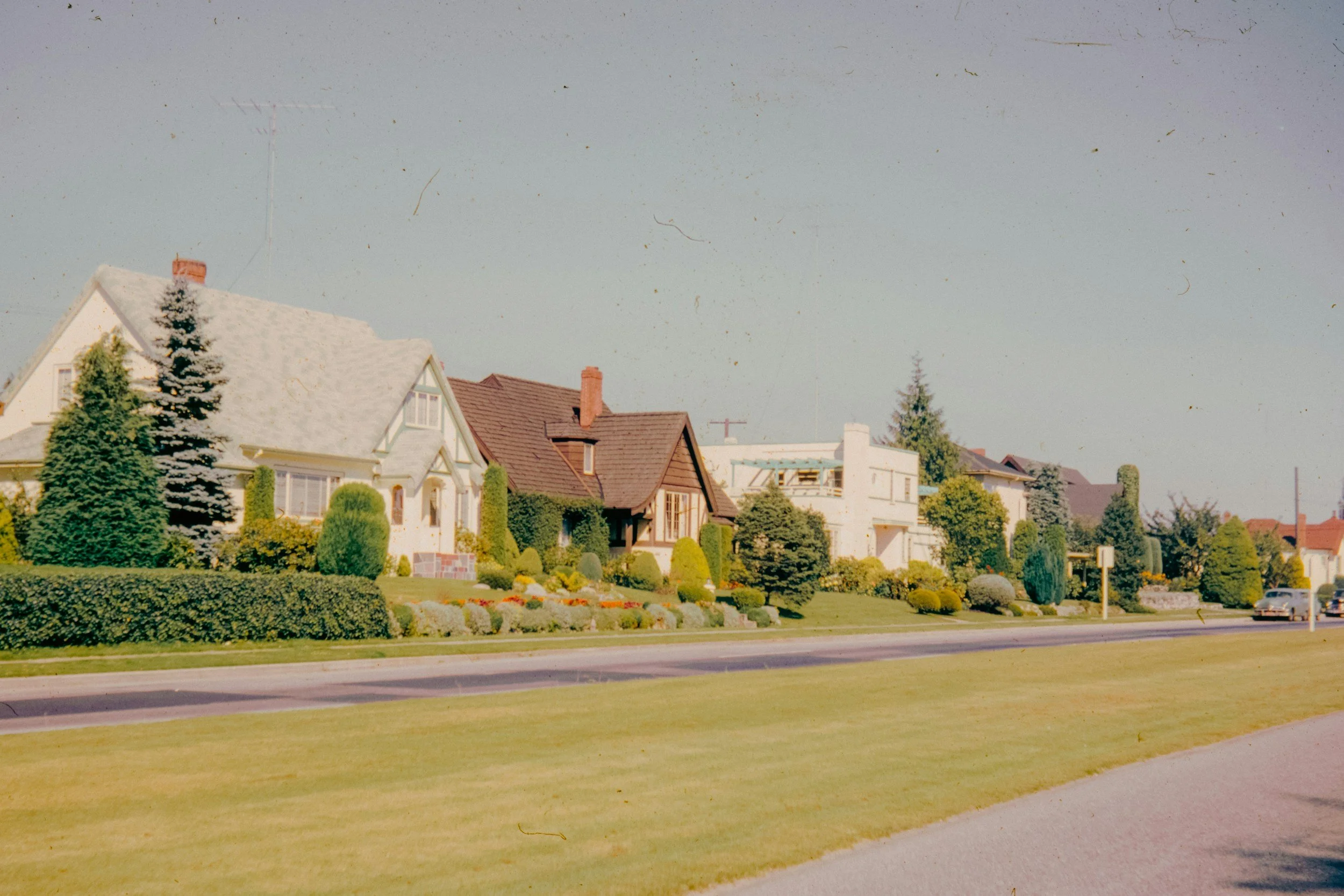
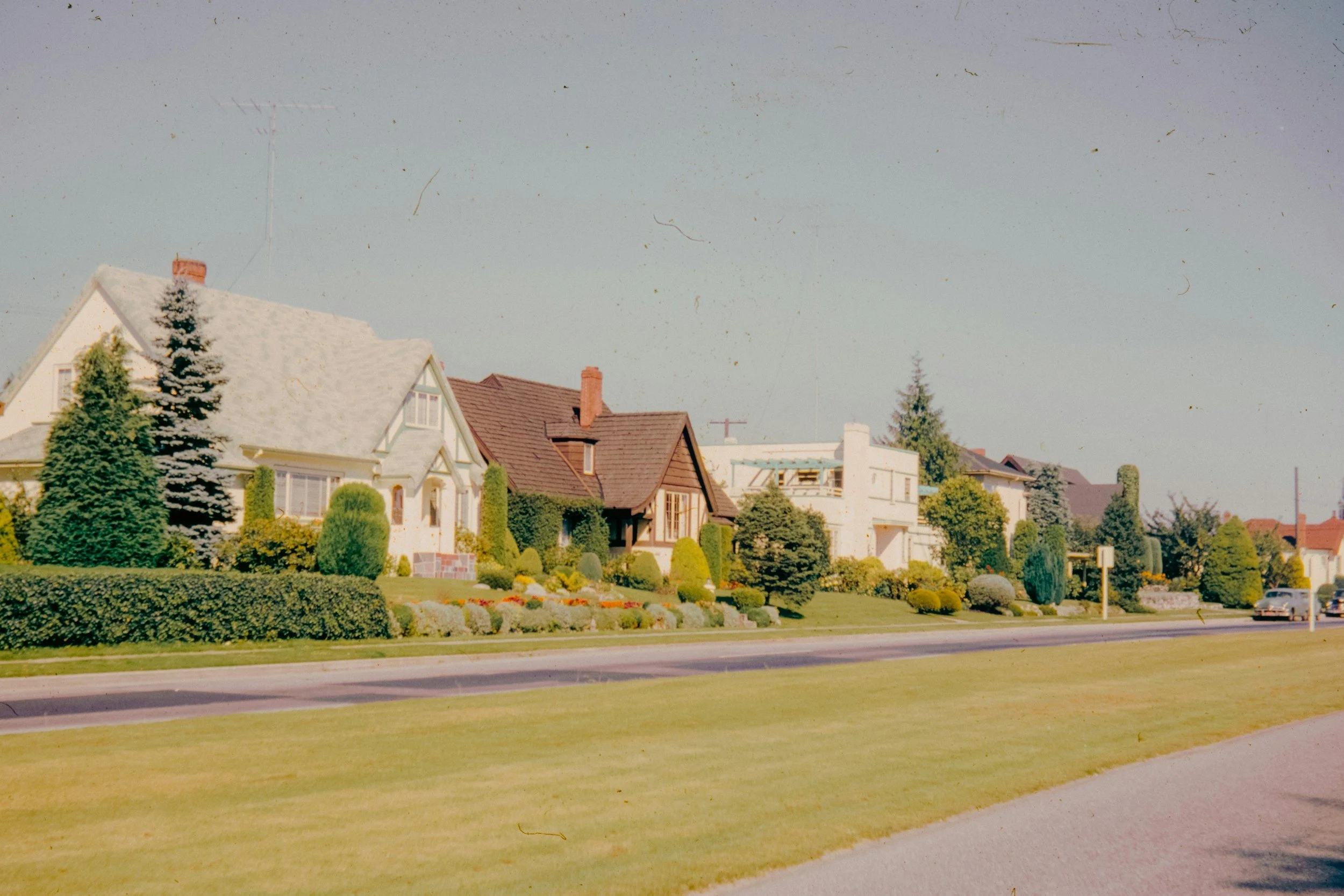
Now, seven years after the birth of Alice, she was a homemaker. The ideal trophy wife of the fifties. The kind of woman neighbors complimented because her curtains were clean and her children were quiet and her husband’s shirts were always pressed.
They never got to travel.
They never saw London.
They never did anything.
Nathan came home from work exhausted, sometimes drunk, sometimes smelling of another woman. Anette would be home, cooking, cleaning, fixing, waiting. Waiting for him to come home. Waiting for the children to come home. Waiting for the day she would wake up and realize all of this had been just a horrible dream.
But it wasn’t.
This was her reality. She was stuck in the life she never chose to live, the life she never wanted. The children she was forced to love. The husband she thought she loved. This house. This prison with clean windows and a trimmed lawn.
In time, the boredom became its own kind of illness. It sat in her bones. It moved with her from room to room. It watched her fold laundry, season meat, wipe crumbs from the table, smile at women she did not know how to befriend. She became very good at appearing alive.
So when she met Adam, it was like breathing air after years underwater.
Adam was the collegiate son of her next-door neighbor. He had graduated and decided he would stay awhile with his family before going off and traveling. When she and Nathan hosted a dinner with them, she got along with Adam right away. He had light gray eyes, the kind that felt as if they were looking right through you. His hair was dark brown. He was tall and slender. Beautiful.
And he wanted, and was going to have, everything she had ever wanted in her life.
They were kindred spirits. They shared ideas of never being caged, of never settling, of wanting more than this mundane life. And he saw that in her too. There, within her sunken eyes, lived a dull fire that had been burning for years. The ache. The yearning to be free.
He visited her frequently. At first, only in the polite ways men could visit married women in neighborhoods where every curtain had a watcher behind it. A book returned. A question for Nathan. A message from his mother. Then, slowly, the visits became theirs.
They spoke in the kitchen, in the sitting room, at the threshold of the back door. They spoke about cities and books and politics and trains leaving stations before dawn. They spoke as if speech itself were a country they could escape into.
One day, while she was cleaning, he came to visit her. He knocked on the door frantically. She opened it, and he barged in without saying anything. She closed the door, and as she turned, he grabbed her, pushed her against it, and kissed her fervently on the mouth.
That dull fire grew into beautiful, violent flames within her. It was something she had not felt. Something she had never felt.
There, against that door, he had her. As he kissed her, he pulled up her dress and pulled down his pants. Within an instant, he was inside of her. Within an instant, they were both gone. They were lit up like embers.
I love you, she felt his body say with every single movement. I love you, I love you, I love you.
I love you too, her body screamed. I love you too.
When Adam left, she continued on with her routine. Only now, she was happy. Genuinely happy.
And then her children came home.
And then her husband.
And then she realized that everything was still the same.
She was still there.
But for a few hours every day, she had Adam. They talked about the dreams and ambitions they had. They made love wherever they could, whenever the chance was given. They had so much passion for each other. They dreamed about the life they could have together. The life they would have had if she had not been married to Nathan. If she had been four years younger. If she had not believed in Nathan’s promises. If she had not been so drunk that night. If saying no had ever mattered as much as she had once believed it would.
For those few moments, she could escape with Adam to a place where life could have been better.
One day, as he grabbed her and made love to her, naked atop the counter, she heard the kitchen door slam open.
Nathan came home early.
He watched in disbelief for a moment. They were not even aware he was there. Everything felt slow and painful, like getting stabbed by a dull knife. He had come home early. He wanted to surprise her, but instead he got the surprise.
His mouth twisted. His face flushed. He walked quickly, almost robotically, over to them. He yanked Adam’s naked body off of her and began to beat him profusely. She screamed and begged for him to stop.
Nathan got off Adam and grabbed her face. He shoved it to the side, slapped her, then spit on her.
“You whore,” he said. “You fucking common whore.”
Adam slowly got up. Nathan went to beat him again, but she stopped him. She screamed at Adam to leave.
Adam grabbed his things and looked at her. At that moment, she realized he was not going to save her, and it was foolish of her to think he ever could. The embers faded inside both of them as he looked down and away from her. His love, his passion, had reached its limit.
He stormed out of the house and left her there.
Nathan turned to her and asked if that was what she liked.
She began to cry.
“Is that,” he said as he violently grabbed her, picked her up, and threw her onto the kitchen table, “what you like?”
She slid off and landed hard on the floor. He followed her down.
After that, the room became strange to her. The table leg. The cold tile. The red mouth of the roast pan left open on the counter. His voice above her, asking what she liked, what she wanted, what kind of woman she had become.
“I want to hurt you as much as you hurt me,” he said.
She sobbed until the sound no longer seemed to belong to her. From somewhere far inside herself, she found the words, “Please stop.”
He did not stop.
When he was done, she was on the floor like something dropped and forgotten. Her dress was torn. Her body hurt in places she could not yet name. She stared past him, past the kitchen, past the windows and the hedges and the perfect street outside.
She no longer moved.
She no longer cried.
The dull fire in her went out.
When the children came home, the house was clean. She was cooking dinner. Nathan was reading the paper. Everything was back to normal. She served the roast, and her husband kissed her on the cheek. Her children looked for her reaction, and she smiled weakly.
Adam left the next morning.
In the months that followed, everything was as it should be in the suburbs. The hedges were trimmed. The curtains were washed. The children went to school. The wives waved from porches. Men came home at six o’clock and carried the smell of the outside world into houses built to forgive them.
Everything was as it should be.
Except now, Anette felt nothing.
No sadness.
No anger.
Almost as if she had resigned.
This was the life she was living. This was the life she had to live.
And then one day, she felt it stir inside of her.
And she panicked.
She could not live in that house, in those rooms, in her body. She saw her life and who she was, and she saw that she had no family, no friends, no one but her children, whom she did not want. And she felt sorry, so very sorry, because they were beautiful and sweet and deserved the best.
She saw her husband, whom she had not wanted to marry, but who had taken from her on a drunken night, gotten her pregnant, and then called the consequences a family. He had forced her into this life. His cookie-cutter perfect life. The life she had never wanted.
She needed to get out.
She walked down the stairs and into the kitchen. Underneath the sink was the cupboard where she kept all her cleaning products. There, she had the arsenic she rubbed around parts of the house to prevent the mice from coming in.
She took it and went upstairs.
She went into their master bedroom and opened the bottle.
“This is strong stuff,” she said.
She pinched her nose and drank it in. She closed the bottle. She could taste it still in her mouth, so she sucked on Ludens to soften the taste. Then she threw herself back onto the bed.
The calm settled in.
She lay there.
Listening to herself breathe.
Inhale.
Exhale.
The ceiling above her was the color of mother-of-pearl.
She turned her head to the left and studied the wallpaper. Once, it had been bright yellow, with little flowers placed strategically all over it. Now it had faded into a dull pastel, the color of old sunlight. She could feel the texture of the paper with her eyes.
She turned her head back to the ceiling.
At first, there was only the pounding in her skull. Then her body began to betray the calm she had been promised. Her throat tightened. Her stomach clenched. She tried to turn onto her side, but her neck had gone stiff, and the room bent without moving.
Her body jerked.
Dying is painful, she thought.
The thought surprised her. She had imagined an ending like sleep. A soft closing. A quiet room. Instead, her body fought her with animal fury. It sweated. It shook. It emptied itself. It flushed red, then deepened toward purple, as if some ugly flower were blooming beneath her skin.
Then she felt it.
Not the poison.
Not the pain.
The wetness between her legs.
She started crying then, whispering little apologies in her mind. To Alice. To her son. To the life inside her. To the woman she had been before the house, before the wallpaper, before love became another word men used to mean possession.
Her body screamed as she trembled. She closed her eyes and clutched her protruding stomach.
As she went, she could still feel it.
Kick.
Kick.
Kick.